
1. USDT Fundamentals: the Same Ticker Does Not Mean the Same Transfer Route
USDT is a dollar-pegged stablecoin, but it does not live on one chain. ERC20, TRC20, Arbitrum, and Solana versions share the same name while using different token contracts with different confirmation rules and fee structures. Before moving anything, establish which chain your USDT actually lives on, which chain you need it on, and whether the recipient supports exactly that version.
Stablecoins carry their own risks: issuer reserve quality, the security of the platform you use, network congestion, and smart contract exposure all matter. These USDT fundamentals are the starting point for every exchange on/off-ramp routing decision and DeFi security judgment that follows.
2. Exchange On/Off-Ramp Tutorial: a Direct Withdrawal Route Beats a Bridge
Many cross-chain needs can be satisfied at the exchange withdrawal step. Before depositing, check which networks the exchange supports for receiving. Before withdrawing, confirm the network the destination wallet or platform expects. If an exchange can send USDT directly on the target chain, it typically removes one contract interaction and one signature step compared to withdrawing to chain A then bridging to chain B, and any failure is much easier to diagnose.
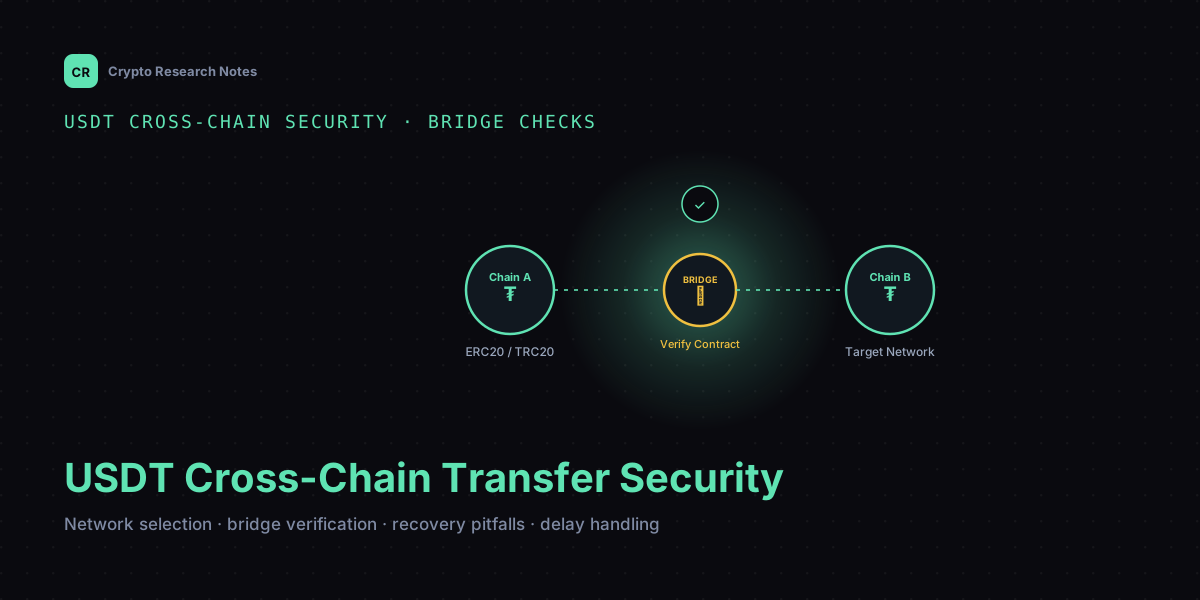
When bridging is unavoidable, compare minimum amounts, expected arrival time, the destination-chain gas token required, and the bridge official support scope. Address, network, and any Memo/Tag requirement all need to match exactly. Always test the full route with a small amount before moving significant funds.
3. Native Withdrawals, Bridges, and Cross-Chain Swaps Have Different Trust Models
An exchange network withdrawal sends an asset on a specified chain. A canonical bridge locks or burns on the source chain and mints or releases a representation on the destination. A cross-chain swap may route through liquidity pools and leave you with a different output asset. The interface says A to B in all three cases; the underlying trust assumptions are not the same.
Verification means more than checking a brand name. Look up the official domain — never enter from a search ad — the token contract on source and destination chains, the supported asset list, upgrade and admin controls, limits, and recent announcements. Whether the output is issuer-native USDT, a wrapped representation, or a third-party mapping determines where it can actually be used or deposited afterward.
4. DeFi and On-Chain Security: an Eight-Point Pre-Transfer Checklist
- Enter through official documentation links — not ads, DMs, or group-chat URLs.
- Check the chain ID, recipient address, and USDT token contract address, not just the icon.
- Keep enough native gas on the destination chain so you can move assets after they arrive.
- Confirm the bridge minimum, fees, expected confirmation count, and exact output asset.
- Test the complete route with a small amount and verify the correct asset reached the right address before sending more.
- Read the wallet prompt carefully: a plain transfer, a specific allowance, and an unlimited approval are three different actions.
- Separate experimental DeFi activity from long-term holdings across different wallet addresses.
- Periodically review and revoke token approvals you no longer need.
On-chain security is not a plugin setting. It is the habit of connecting the asset, network, contract, permission scope, and consequence before signing any transaction.
5. When a Transfer Is Delayed or Fails: Preserve Evidence Before You Act
If USDT has not arrived, do not resend the transaction repeatedly. Save the transaction hash, sender and recipient addresses, network, amount, and time of operation. Check the source-chain explorer first: pending, failed, and confirmed all call for different next steps. If the source transaction confirmed, use the bridge official status page and the destination-chain explorer to find out whether relaying is pending or a manual claim step is needed.
For exchange deposits, separately confirm that the platform supports both the network and the specific asset representation. Do not follow instructions from a stranger screenshot, and do not pay any unsolicited unlock fee. Legitimate support does not need your seed phrase, private key, screen-sharing access, or remote control under any circumstances. If anyone asks for those, end the interaction immediately.
6. Payments and Tool Subscriptions: a Virtual Card Is a Settlement Bridge, Not a Security Layer
For lawful research-tool or software subscription payments, a virtual card, virtual credit card, US virtual credit card, or Visa virtual card can act as a payment bridge. When evaluating any virtual credit card platform or virtual card issuing platform, verify terms, fee structure, supported regions, and issuing credentials yourself. The features of RDVCC virtual credit cards should likewise be confirmed from its current official disclosures — nothing in this article constitutes an endorsement of its performance.
These services should only be used for genuine, lawful spending — never for cash-out, money laundering, or circumventing geographic restrictions. For publicly available tool and resource discovery, CHDH Tools Directory is an external reference directory, but every outbound link still requires independent verification before use.
7. Summary and Long-Tail Questions
Safe USDT cross-chain transfers start with fundamentals and token-version clarity, lean on direct exchange on/off-ramp routes wherever possible, and apply a systematic verification checklist when bridging is unavoidable: contracts, bridge credibility, permission scope, and destination-chain gas. The DeFi/on-chain security baseline is small test transfers, minimum approvals, official entry points only, and zero trust in any unsolicited recovery contact.
Common long-tail questions: Can TRC20 and ERC20 USDT be sent directly to each other? No — a supported routing path is required. How long does bridging take? It depends on confirmations, relayer speed, and any claim step, and can range from minutes to hours. Can a wrong-network transfer be recovered? Only if the recipient controls that address and chooses to assist — there is no guarantee. Why cannot assets be moved after they arrive? The destination chain may lack native gas. This article is for learning and research only and is not investment advice; crypto asset prices are highly volatile, so make your own decisions and take responsibility for them.